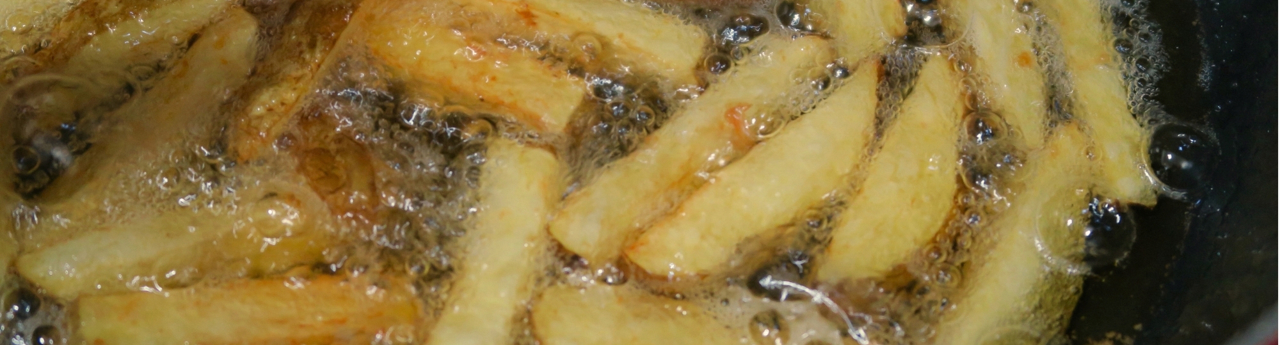
What makes chip pan fires particularly frightening is how quickly they develop and how intensely they burn. You’re heating several pints of oil to temperatures between 160°C and 190°C.
If the oil is overheated, reaching the smoke point (around 230°C for most cooking oils), the oil is dangerously close to its flash point: the temperature at which it ignites on its own. If you see smoke rising from your pan, it’s already too hot. You’re moments away from a fire.
Ditch the chip pan, oven chips and air fried chips are much safer. If you want to deep-fry at home, switch to a safe thermostatically controlled electric deep-fat-frier.
Never leave cooking unattended. If you must leave the kitchen, turn off the heat and remove the pan.
Only fill your pan one-third full of cooking oil. This prevents any overflow of oil when you add your chips. Should the oil overflow onto the hob it will ignite immediately.
Never cook after drinking alcohol or when tired. Reactions and judgment are impaired, and you are more likely to fall asleep and forget about the pan.
Test the oil temperature before adding food. Drop in a small piece of bread or a single chip. If it crisps within 60 seconds, the oil is ready. If it burns black instantly then the oil is too hot. turn off the heat and let the oil cool.
Don’t add wet or frozen chips to hot oil. This can cause violent splattering and cause the oil to overflow. Ice crystals on frozen chips vaporise instantly, causing the oil to bubble up. Always dry chips thoroughly before frying.
Fires can still happen despite your best efforts. Knowing the correct response could save your life and your home.
If the oil ignites your instinct might be to throw water on the flames or move the pan to the sink. Both actions can create explosive results.
Water and burning oil don’t mix. They explode. The water vaporises instantly when it hits the superheated oil, expanding to into steam to roughly 1,700 times its original volume. This explosive expansion sends a fireball of burning oil shooting upwards and outwards. Meaning you could suffer severe burns and kitchen cabinets, curtains and anything else nearby can catch fire within seconds.
Never, ever throw water on a chip pan fire. We can’t emphasise this enough. Water creates an explosive fireball that will spread the fire and cause severe burns.
Don’t move the pan. The handle will be hot. The pan is heavy. Moving it risks spilling burning oil on yourself or spreading the fire. Leave it where it is.
Turn off the heat if you can reach the controls safely. But only if you can do this without leaning over the flames. For electric hobs, you can switch off the electricity at the mains. For gas hobs, you may need to turn off the gas supply if it’s accessible. Can’t reach the controls safely? Leave them alone.
Don’t attempt to tackle the fire yourself. Old advice about using damp tea towels or fire blankets is now considered too risky by fire services. The risk of severe burns is too high. Even experienced firefighters struggle to extinguish oil fires safely.
Get everyone out immediately. Leave the room. Close the door behind you to contain the fire and limit the amount of oxygen. Evacuate everyone from the property. Call 999 from outside or a neighbour’s house. Never go back inside.
Further information on chip pan fires can be obtained by following the link below.
Can I recycle it? Cooking oil is not collected as part of your recycling collection. Please do not pour it down the drain. You can seal your oil in a suitable container and place in your general waste collection, or you can take up to 5 litres of cooking oil to most Household Waste and Recycling Centres. Useful information Household Waste and Recycling Centres Back to the A-Z
Email: info@cornwallhousing.org.uk
Telephone: 0300 1234 161