
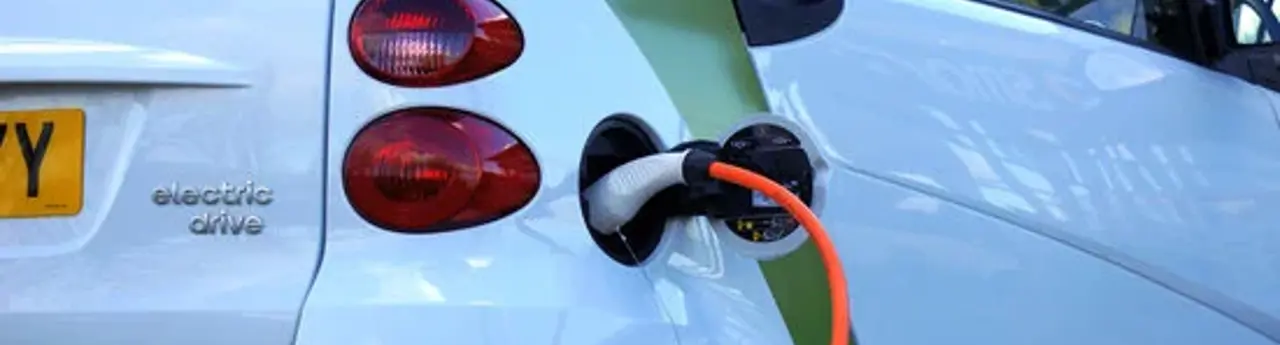
Electric vehicle charging points make it easy for eco-friendly drivers to charge electric cars whilst they are on the go. We understand that tenants will want to charge their electric cars from home. So, we have provided some guidance on installing charging points.
Yes. As Cornwall Council is the property owner, you must obtain permission from Cornwall Housing before installing an electric vehicle (EV) chargepoint.
Installations provided through mobility schemes, vehicle adaptation schemes, or where government grants or funding towards installation costs are being applied for, will also require approval from Cornwall Housing.
In many cases, planning permission is not required for EV chargepoints installed at properties with off-street parking. However, planning permission may still be required depending on the property type or location, including listed buildings. Residents are responsible for obtaining any planning permissions required.
We recommend contacting Cornwall Housing as early as possible to discuss your proposals and requirements. This can help minimise delays and identify any additional approvals or information required.
You must not install, alter or connect any EV charging equipment to the property’s electrical installation without approval.
To request permission to install an EV chargepoint, please complete a permissions form which can be found here: Cornwall Housing – Improving your home
Cornwall Housing will review your request and confirm whether:
No installation works should commence until written permission has been received from Cornwall Housing.
Residents are responsible for the costs associated with the installation, operation, maintenance, repair, and removal of EV charging equipment.
Government grants or funding may be available to help towards installation costs, subject to eligibility and scheme requirements.
The tenant is responsible for maintaining the electric vehicle charger after it has been installed. Regular upkeep ensures the charger operates safely and efficiently.
The electrical installation associated with the EV chargepoint will be inspected every five years as part of Cornwall Housing’s Electrical Testing Programme (EICR).
In most cases, yes. Permission will normally only be granted where the property already has suitable off-street parking, including a dropped kerb and hardstanding, to allow vehicles to be charged safely.
Where charging is proposed from on-street parking, additional approval may be required from Cornwall Council for a kerbside charging channel or other approved cable management solution. These channels route the charging cable level with the paved surface to help avoid obstruction to the public right of way.
Any on-street charging requests will be considered on a case-by-case basis.
Permission will not be granted if you live in a flat. You need to be legally entitled to a parking space. Charging cables cannot be placed over public land, access routes, or communal areas, including pavements, even temporarily.
Your EV charger should be installed as close as possible to where the vehicle will normally be parked to allow charging to take place safely.
All EV charging points and charging posts must be located within the boundary of the property. Installation within shared or communal areas is not permitted.
You will need a suitable electrical supply available at the proposed location, including a dedicated circuit from the property’s consumer unit capable of supporting the charging equipment.
Your installer may advise that upgrades to the existing electrical installation or consumer unit are required before the charger can be installed. Where this is identified, you must contact Cornwall Housing for further advice before works proceed.
Always check that the charging cable supplied with the charger is suitable for the intended parking location and can safely reach the vehicle without stretching, creating trip hazards, or obstructing walkways or access routes.
Charging cables should be routed safely at all times and must not create an obstruction or trip hazard. Avoid trailing cables across areas where people regularly walk, particularly at night.
Yes. Under current planning rules for permitted development, domestic EV chargepoints must not exceed 0.2 cubic metres in volume.
Your EV chargepoint must only be installed by a competent and appropriately qualified electrician who is registered with a Competent Person Scheme, such as NICEIC or NAPIT.
Installations must comply with current electrical safety standards and legislation, including but not limited to:
Charging equipment must be suitable for the installation environment and include appropriate electrical protection in accordance with current standards.
Your installer must notify or obtain approval from the Distribution Network Operator (DNO) and you must provide this to Cornwall Housing.
Further guidance on connecting electric vehicles and chargepoints can be found on the Energy Networks Association (ENA) website
When the works are completed, the following information must be provided to Cornwall Housing:
Where applicable, you may also be required to provide:
If the EV chargepoint is no longer required, or if your tenancy ends, the charging equipment must be removed and the property returned to its previous condition.
The removal works must be carried out by a competent and appropriately qualified electrician where electrical disconnection or alteration works are required.
This may include the removal of:
Where required, any walls, surfaces or ground affected by the installation works must be made good.
If the equipment is not removed or the property is not reinstated appropriately, Cornwall Housing may arrange for the works to be completed and recharge the costs to you.
You must not:
Residents should ensure they have appropriate insurance cover relating to the installation and use of EV charging equipment and consider notifying their home contents and vehicle insurer before installation.
Further EV charging safety guidance can be found from Electrical Safety First
Email: info@cornwallhousing.org.uk
Telephone: 0300 1234 161